
Caroline Parole and Probation Compared
A person can leave Caroline County Detention Center and still face rules in the community. The source of those rules matters. The Maryland Parole Commission decides whether an eligible person may receive discretionary parole. The DPSCS Division of Parole and Probation, commonly called DPP, then supervises parole, probation, and mandatory supervision. A judge creates probation through a court order, often with a suspended part of a sentence. Mandatory supervision is tied to state sentence credits and continues legal custody after physical release.
Home detention is different again. Caroline County may monitor a pretrial person outside the secure jail while the criminal case is still open. That is not parole, probation, or final discharge. Use the order and custody record to identify the status before asking an office to verify it.
| Status | Who creates it | What it means after release |
|---|---|---|
| Parole | Maryland Parole Commission | Conditional community release after a suitability decision, followed by DPP supervision. |
| Probation | Maryland court | A community sentence or suspended-sentence condition supervised by DPP. |
| Mandatory supervision | Maryland law and sentence credits | Physical release before maximum expiration while legal custody and parole-like terms continue. |
| Home detention | Court and local corrections process | Placement outside the jail with monitoring, often while a case or sentence remains active. |
- Parole
- A conditional release approved by the parole authority before the sentence fully expires.
- Probation
- Court-ordered community supervision that may stand alone or follow a jail term.
- Discharge
- The formal end of the relevant custody or supervision status.
- Mandatory supervision
- Community release caused by sentence credits while the person remains in legal custody.
Verify Caroline Post-Release Supervision
Maryland does not publish a statewide name-based DPP search. The public DPP dashboard contains aggregate figures, not person records. Verification therefore requires several targeted checks. Start with the custody type and avoid treating the DPSCS Incarcerated Individual Locator as a supervision directory. That locator covers certain people now housed in state facilities and removes people no longer in custody. It does not show parole, probation, or discharge history.
A dated court entry can help identify probation or a sentence modification, while VINE may report a community-supervision event. Neither replaces an official supervision record. For broader released-person proof paths, the Caroline County released inmate search explains how to combine the county record, court docket, and receiving custodian.
- Identify whether the last Caroline County custodian was the Detention Center, a Maryland state facility, or another system.
- Search Maryland Judiciary Case Search for the matching case, sentence, probation order, later modification, and release-related entries.
- Check Maryland VINE for a custody or supervision event, then renew registration after a move between jail, prison, and community supervision.
- Contact the Denton DPP Field Office and ask what supervision status it can lawfully confirm.
- Request the relevant existing record if the office cannot give a complete answer by phone.
Caroline Supervision Office Records
The local state supervision office is not at the jail. Caroline County parole and probation work is routed through the Denton Field Office in the District Court Multi-Service Center. Staff may explain how to request an existing record and may confirm limited information when disclosure rules allow. Victim Services states that a victim may contact a DPP office for assigned-agent information. Other callers should not assume that a full case file or agent details will be released.
Division of Parole and Probation, Denton Field OfficeDistrict Court Multi-Service Center
207 South Third Street
Denton, MD 21629
Phone: 410-819-4550
Fax: 410-819-4551
DPP field-office directory
The office location helps separate two Caroline County records. Caroline County Department of Corrections holds the local jail custody and departure record. DPP holds state community-supervision records. A person who left the jail on bond without a probation order may have no DPP file, while a person transferred to state prison may later enter parole or mandatory supervision under DPP.
The official DPP office directory shows the Denton contact route. Its page does not provide a name search or case results. Phone verification also may be limited by confidentiality. A narrow records request should identify the person, relevant period, and specific existing supervision or discharge record sought.
The official Denton DPP directory entry is shown below as a visual check on the correct office and contact route.
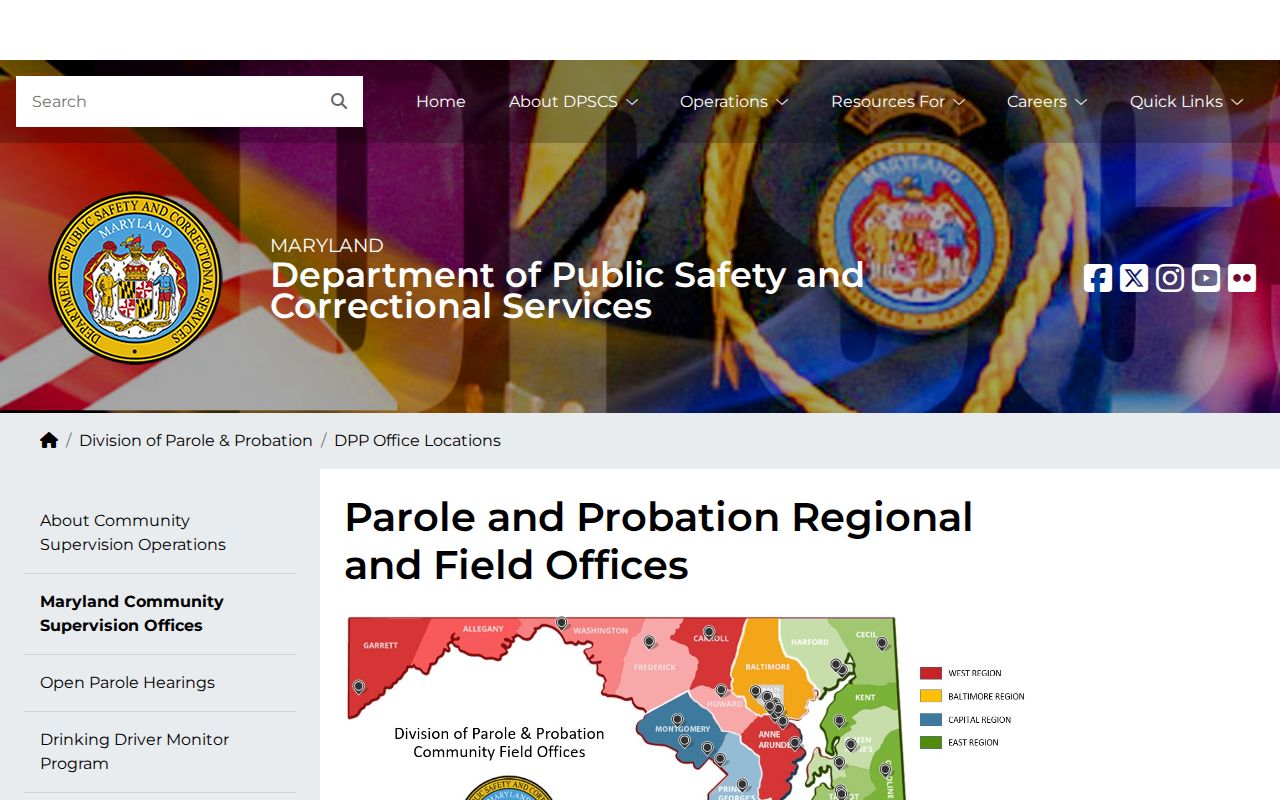
The directory image identifies the supervision office, not a searchable list of people under Caroline County parole or probation.
Note: Calling the jail alone cannot establish whether a released person later reported to the state supervision office.
CARE Is Not Caroline Parole
Caroline County’s Community Assistance and Rehabilitation Enterprise, known as CARE, can create a misleading visual clue. The program places supervised, low-security incarcerated people on projects for public and nonprofit agencies. A person may therefore be seen outside the detention center while still in custody. CARE is not parole, work release, probation, or proof that Caroline County correctional control has ended.
Confirm CARE status with the local custody record. A true parole record begins with a Maryland Parole Commission action and, after release, DPP supervision. Probation comes from a court order. CARE participation instead remains part of the local correctional program. That distinction matters when trying to reconnect with someone or determine which office holds a current record.
Visible work in the community also does not establish a Caroline County release date. The person may return to secure custody after the project. Check VINE and the jail record for an actual departure event, then use DPP only if parole, probation, or mandatory supervision applies.
Caroline Parole Hearing Records
Parole hearing records have two distinct calendars. The Commission landing page lists public Commission meetings every other Wednesday and posts agendas and minutes. Those meetings concern Commission business. They are not a person-by-person parole hearing search. The separate Open Parole Hearings master list is the individual schedule and can include the date, time, hearing location, person’s name, and DOC or local identifier.
A calendar entry means only that a hearing is set. It does not prove approval or physical release. The Commission FAQ describes three broad results: refuse, rehear, and approve. “Refuse” means no further parole hearing is set. “Rehear” sets a later review. “Approve” can still depend on a release plan, program, placement, or other requirement. Many matters begin with a hearing officer’s recommendation to a commissioner, while certain life or homicide cases generally use a two-commissioner panel.
The Commission’s parole outcome guidance explains those labels. No statewide public individual decision-results database was found. Commission minutes are also not a substitute. Confirm an eventual physical release through VINE, DPP, and the record held by the custodian.
Eligibility is not a release date. Under Correctional Services §7-301, a general eligible term of at least six months ordinarily reaches the statutory eligibility point after one-quarter of the aggregate term. Violent, life, mixed, and selected repeat drug sentences have different floors. The current statute and official sentence calculation control each case.
Caroline Supervision Violations and Warrants
A violation is an alleged breach of a supervision term. An absconder is generally someone alleged to have stopped reporting or otherwise avoided supervision. Neither label should be applied from rumor or a missing search result. DPP operates a Warrant Apprehension Unit, but no official public Caroline County name list was located. Only the supervising agency and court records can support a person-specific conclusion.
DPP lists 877-227-8031 for nonemergency violation information and directs emergencies to 911. VINE may also send notice of supervision changes or rearrest when the participating system supplies the event. An alert signals a reported change. It is not a complete warrant file, and it may arrive after the agency action.
Conditions vary by order and case. They may include reporting, program participation, travel limits, payment terms, or other instructions contained in the official record. A suspected violation can lead to a warrant, hearing, modified terms, revocation, or no sustained finding. The actual order and later docket entries should be read together.
Note: A missed appointment does not by itself prove absconder status, a warrant, or the end of Caroline County supervision.
When Caroline Supervision Ends
Supervision can end through expiration, discharge, court action, or an authorized change in status. Active monitoring can also end before all legal duties do. Maryland Correctional Services §6-117 permits earned compliance credits that reduce active supervision by twenty days for each compliant month when the statute applies. It also describes abatement, which can end active monitoring or home detention while the case expiration and some duties continue.
For that reason, no current agent contact or no visible monitoring does not always mean the full legal sentence has expired. Ask DPP for an existing discharge, abatement, or expiration record. For probation, compare the sentencing order with later court modifications. For parole or mandatory supervision, identify the maximum expiration and any later revocation or discharge action.
A final custody release and the end of supervision are separate milestones. The Caroline County jail record establishes when local physical custody ended and whether a transfer occurred. DPP or the court establishes the community-supervision status. Keep both dates when the purpose is to confirm the full sequence.